

Climbing Hold Type Glossary
This guide covers some of the basic types of climbing holds, but keep in mind that there are many variations in names and descriptions.
Click on a picture to see products of that hold style. (more info here)
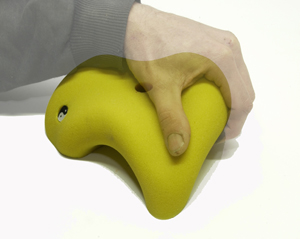
Jug
- What it is: A big, comfy climbing hold that’s easy to grab. Think of it as a handle you can really wrap your fingers around.
- Best for: Beginners or anyone looking to rest mid-route because it offers a strong, secure grip.
- Shape/Style: Usually deep and rounded, making it feel like you’re holding onto a jug or bucket.
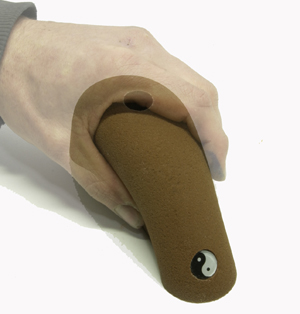
Pinch
- What it is: A hold that requires you to squeeze it from both sides using your thumb and fingers.
- Best for: Building finger and hand strength. Often used in more challenging routes.
- Shape/Style: Varies in width and depth, but always something you can pinch between your thumb and fingers.
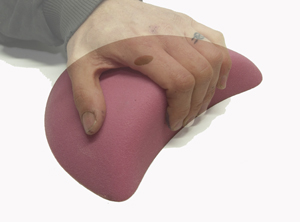
Edge
- What it is: A flat, narrow hold that you can only grab with the tips of your fingers.
- Best for: Testing your finger strength and technique. Common on more technical routes.
- Shape/Style: Thin and horizontal, like grabbing the edge of a book or a thin ledge.
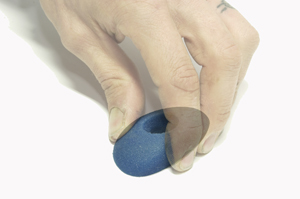
Crimp
- What it is: A small, sharp hold where you have to grip with the very tips of your fingers, often with your thumb pressing down on top of your fingers for extra grip.
- Best for: Advanced climbers working on finger strength and technical skills.
- Shape/Style: Tiny and flat, just big enough for the first joint of your fingers. Can be painful if overused!
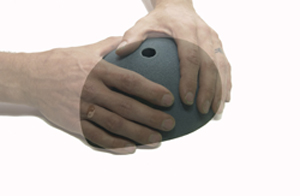
Sloper
- What it is: A large, round hold that doesn’t have a defined edge, so you rely on friction and open-handed grip.
- Best for: Building strength and improving body positioning, especially on overhangs or sloping surfaces.
- Shape/Style: Big, rounded, often dome-like with a surface that’s hard to grab onto.
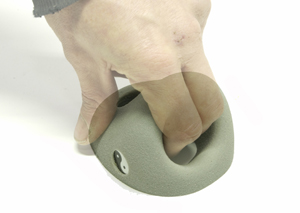
- What it is: A hold with one or more holes that you stick your fingers into.
- Best for: Finger strength and precision, as you’re usually limited to just a couple of fingers.
- Shape/Style: Can have 2-finger, 3-finger, or even mono (1-finger) pockets. Depth and size vary, affecting difficulty.
Undercling
- What it is: A hold that is gripped from underneath, requiring you to pull up and out rather than down.
- Best for: Routes where you need to create upward force, usually on overhangs.
- Shape/Style: Angled upwards, so you have to pull your body toward the wall to use it effectively.
Sidepull
- What it is: A hold that you pull sideways rather than down, usually with one hand while the other balances or pushes against the wall.
- Best for: Off-balance moves or traversing across the wall.
- Shape/Style: Positioned to the side, often elongated or angled to provide a secure grip.
Flake
- What it is: A thin, flat hold that juts out from the wall, resembling a flake of rock.
- Best for: Technical routes where you need to use your hands and sometimes your feet to leverage the hold.
- Shape/Style: Thin and protruding, sometimes allowing you to grip it from either side or even lie back against it.
Volume
- What it is: Large, often modular shapes added to the wall to change the route's dynamics, providing a base for smaller holds or being used directly.
- Best for: Changing the route’s difficulty or style; they add complexity to the wall.
- Shape/Style: Can be large and geometric, ranging from triangular to cuboid or even irregular shapes.
Slab
- What it is: Not a hold per se, but a type of wall angle that’s less than vertical, requiring balance and footwork rather than strength.
- Best for: Beginners or those looking to practice technique and balance.
- Shape/Style: The entire wall is the challenge, with minimal holds. It’s all about body positioning.
Gaston
- What it is: A hold that requires a pushing motion outward, like opening double doors with both hands.
- Best for: Technical moves that challenge your shoulders and chest.
- Shape/Style: Typically flat or slightly angled, designed to be pushed against rather than pulled.
External Links to more information on climbing hold type/styles and how they are used.
Names of Indoor Rock Climbing Holds and How to Use Different Types