


Home Climbing Wall: Why Function Beats Aesthetic Trends
When planning a home climbing wall, it is tempting to replicate the sleek, modern look of today’s commercial gyms. Clean grey panels, wide open spaces, and aesthetic boulder problems set in a single, matching hold colour look fantastic. Commercial gyms set this way for good reason—it provides clear visual navigation for large crowds and reduces wait times for problems.
However, home walls operate under entirely different rules. Trying to copy commercial aesthetic trends in a home setup often limits your space, inflates your budget, and slows down your training progression.
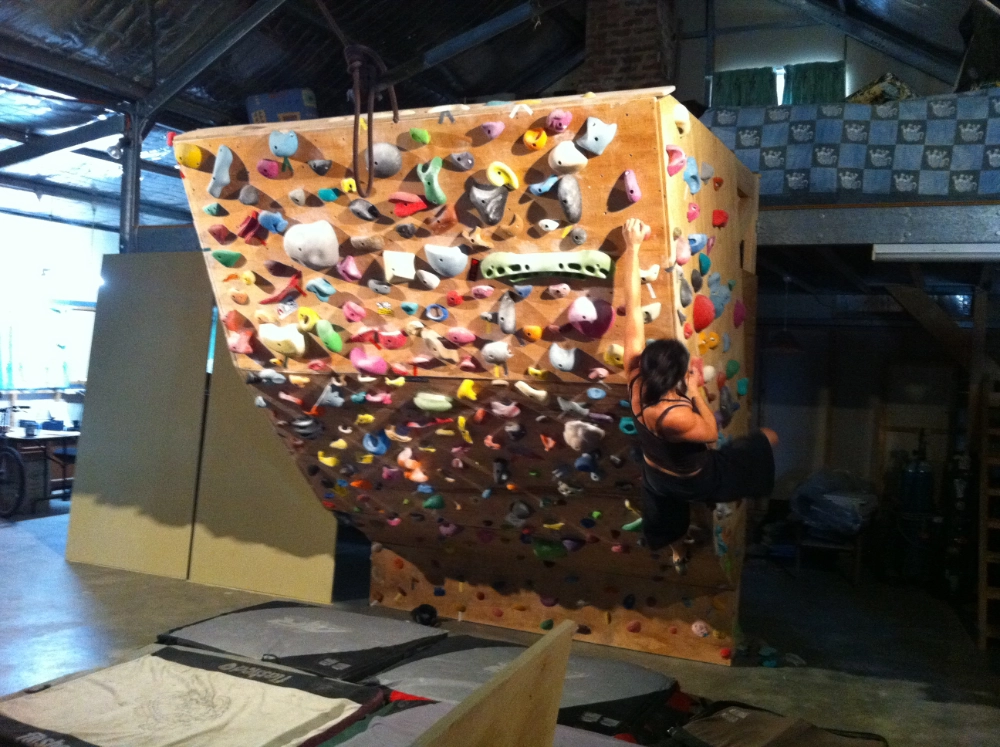
If you want to get the most out of your home board, the classic high-density "spray wall" still reigns supreme.
1. Massive Cost Savings and Hold Flexibility
Setting single-colour problems requires buying holds in bulk from specific manufacturers to ensure exact colour matches. For a commercial gym with large budgets, this is standard practice. For a home wall builder, it can quickly become an unnecessary expense.
A high-density spray wall frees you from brand and colour constraints. You can:
-
Mix and match hold brands, shapes, and textures without worrying if the blues match.
-
Pick up second-hand hold packs or factory seconds at a fraction of the cost.
-
Add holds gradually over time whenever you find a set you like.
By ignoring colour matching, every dollar spent goes directly into movement variety rather than visual symmetry.
2. Maximising Limited Space
Commercial facilities have thousands of square metres to play with, meaning they can afford to leave large sections of a wall blank to highlight a single aesthetic line. At home, wall real estate is your most precious resource.
Leaving 80% of a home wall empty just to make one problem stand out visually means wasting valuable space. Packing your board with holds allows you to create dozens—or even hundreds—of distinct problems on a single panel. What would fit 2 or 3 single-colour problems in a commercial setting can easily accommodate a near-infinite library of moves on a dense spray wall.
3. Lower Maintenance, Infinite Variety
Stripping, washing, and resetting holds takes time—time you would likely rather spend actually climbing.
With a dense wall, you set the holds and can leave them up for longer periods of time. You can create new routes instantly using:
-
Use differnet colour tape to show which holds are in a problem.
-
If you are unfortunate and have t-nuts without holds, simply adding another holds makes more than one new problem.
-
Name every hold with tape then have whiteboard next to the board listing hold names in the problem.
-
Don't want to remove holds? Rotate a bunch of holds 180 degrees.
-
Digital routing apps that allow you and your friends to log new problems in seconds. Try: Stokt or Retro Flash.
You get a fresh set of challenges every session without ever picking up an Allen key or an impact driver.
4. Superior Mental and Technical Training
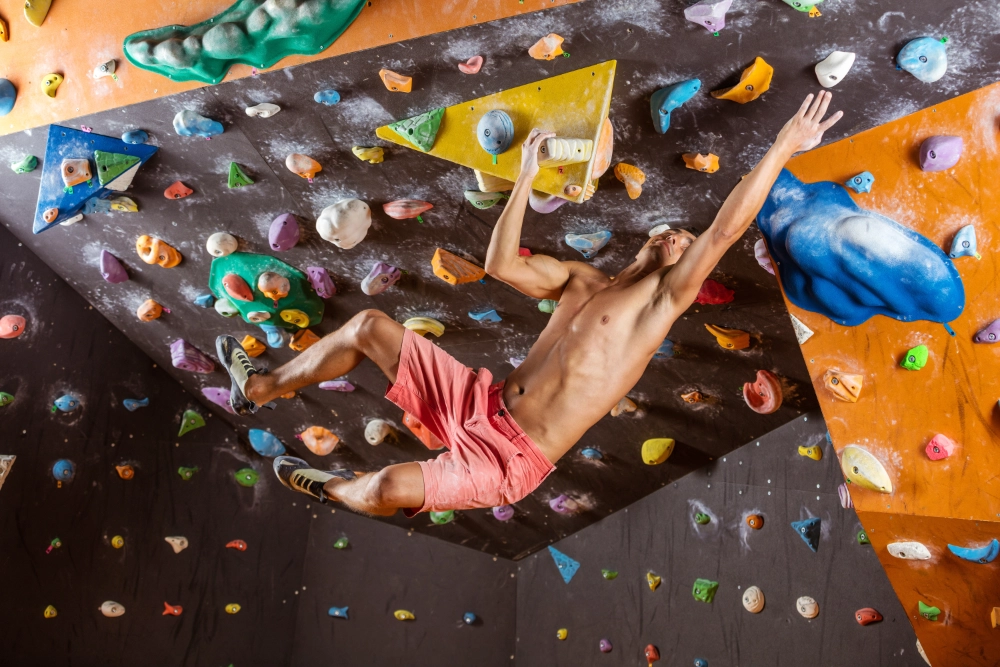
On a single-colour problem, the route is spoon-fed to you; every hand and foot placement is isolated and visually obvious. While this is great for reducing wait times in commercial climbing, high-density walls train a broader set of skills:
-
Route-Finding & Memory: Spotting your next hold in a sea of options forces you to mentally map the route before leaving the mat and remember sequences under pressure.
-
Customisation: If a move is slightly too long or too short for your reach, a dense wall allows you to micro-adjust feet or intermediate hands to fit your specific morphometry.
-
Realistic Movement: Natural rock doesn't come colour-coded. Learning to read feet and body positions on a cluttered wall builds spatial awareness that translates directly to real outdoor crags.
Function First
Commercial gyms do a brilliant job of creating clean spaces for the indoor climbing community. But your home wall is your private training lab.
By prioritizing density, budget efficiency, and movement over aesthetics, you turn a small space into an endless training tool that will keep you challenged for years to come. Fill the wall, mix the colours, and let the movement take center stage.